Skip to content
In a Lonely Place (Ray, 1950)

In a Lonely Place (1950)

What she whispers to him is less important than the unexpected moment of silent intimacy shared between these two lovers in a crowded, noisy room. The whole film is in that image — Dix bowing his head to her as a gesture of trust; Laurel closing her eyes in hope of love, then opening them to the sight of a detective entering the room.

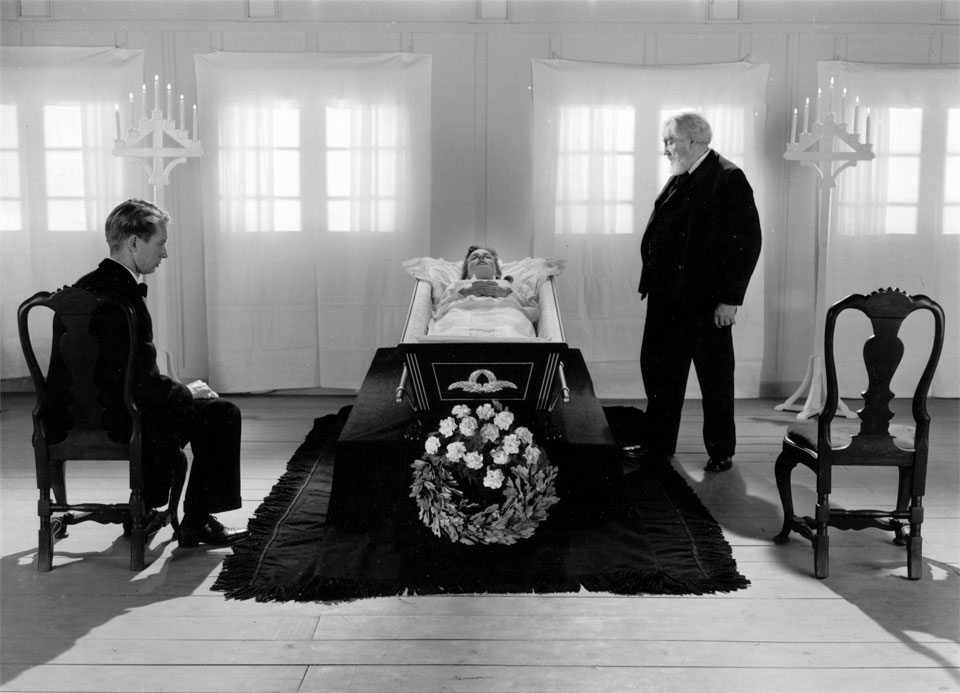
Ordet (Dreyer, 1955)

Ordet (1955)

  • by

That sudden, strange, and fleeting encounter with something beyond ourselves, something almost otherworldly, transcendence is both the aspect of the arts to which I’m most drawn and about which I feel least capable of writing.

The Culture of the Cold War (1991)

The Culture of the Cold War is divided into chapter-long studies of the major voices of popular culture, each of which, according to Whitfield, reflected and contributed to the polarity that characterized so much of the 1950s.

American Fiction in the Cold War

Schaub focuses the majority of his attention on the early post-war years, turning to the New York Intellectuals—Howe, Trilling, and Schlesinger, in particular—for his diagnosis of the crisis at the heart of the American Left at the start of the Cold War.

Attack! (Aldrich, 1956)

Attack! (1956)

The following was written for a graduate seminar on Cold War military history. It examines the confluence of social, political, and economic events that allowed the financing and production of such an ambivalent anti-war film in Eisenhower America.