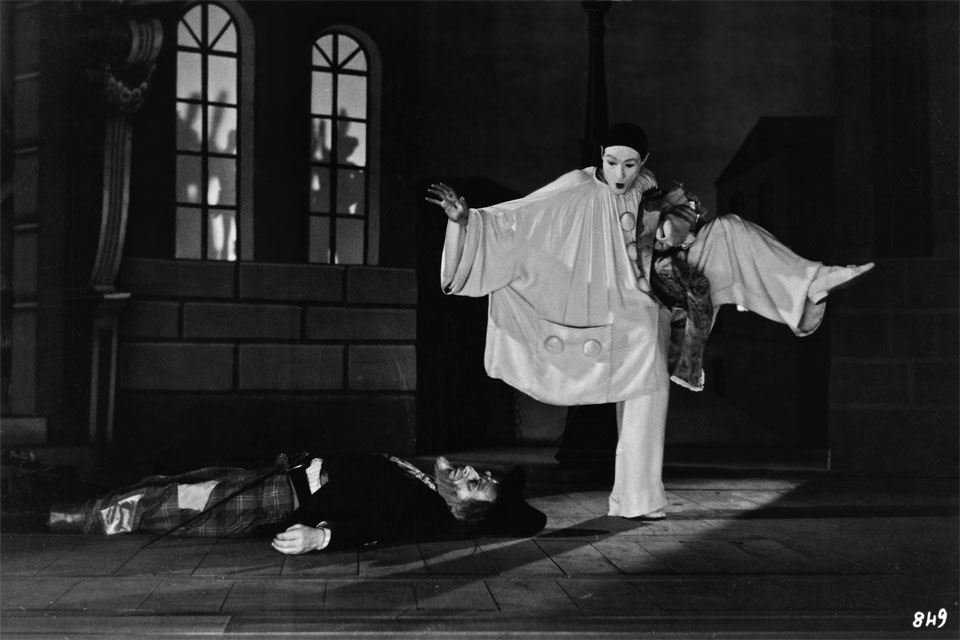
Calendar (1993)
Made for German television and with a budget of only $100,000, Calendar is one of the most compelling and stylistically inventive films I’ve seen this year.
Made for German television and with a budget of only $100,000, Calendar is one of the most compelling and stylistically inventive films I’ve seen this year.
Dale Peck at Slate offers the best critical reading of HBO’s Angels that I’ve found. He points out something that has bothered me a bit as well: the film just isn’t very funny. Which is a shame, because the play is really funny.
I’m thrilled so far with Angels. Mary-Louise Parker is stealing the show as Harper, and Justin Kirk is fantastic as Prior. The homage to Cocteau and the casting of the prior Priors were both brilliant. But why, in their trimming and reshaping, did Kushner and Nichols have to cut my two favorite lines from Millennium Approaches?
I don’t read White for his reviews, I read him for his attitude, and I wish there were more out there like him.
Over at Film Journey Jonathan Takagi has posted a series of capsule reviews from his recent trip to Paris.
We all know that Stanley Kauffman, that grand icon of American film-reviewing, has been with The New Republic since 1958. But did you know that he was preceded immediately by a young punk of a wannabe novelist named Philip Roth?
HBO’s economic freedom is just one of the many topics of discussion over at Newsweek, where Mike Nichols, Tony Kushner, and their cast are talking up Angels in America.
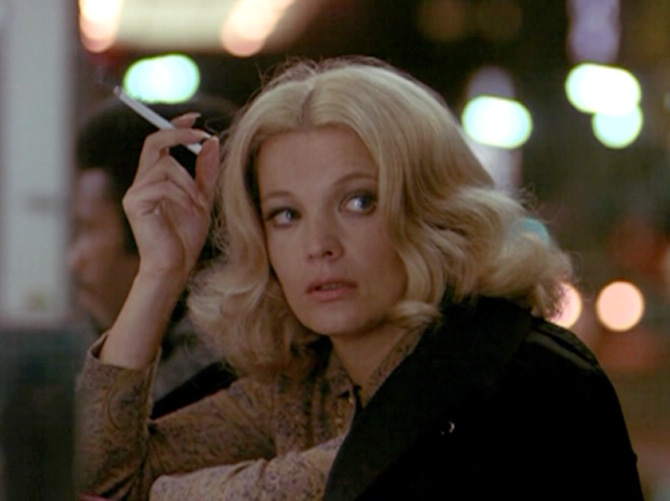
The greatest face in film history? Ray Carney on John Cassavetes’ Minnie and Moskowitz.
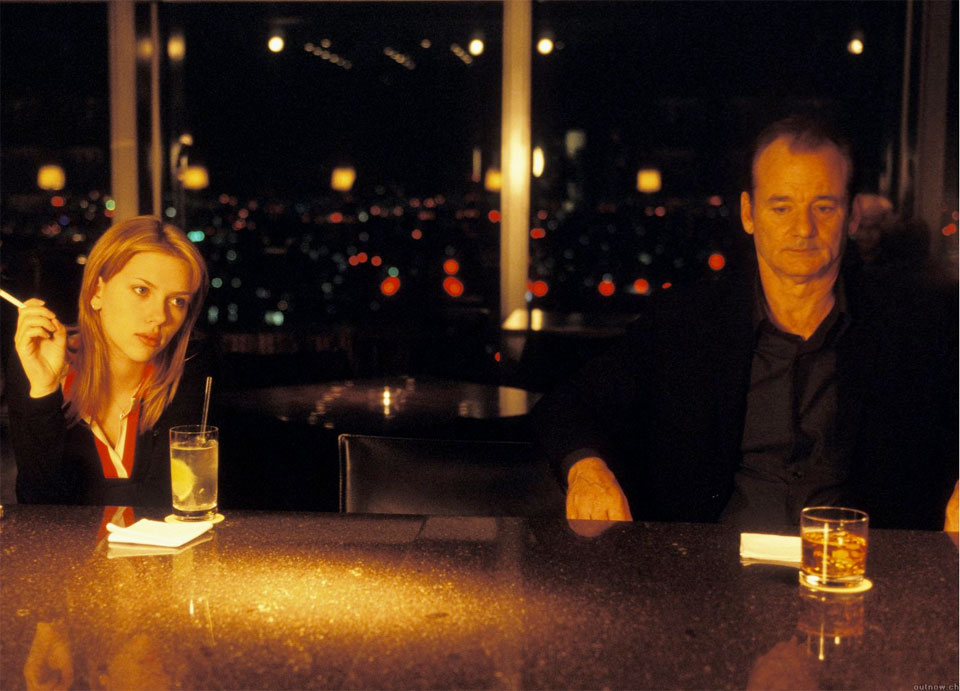
I really enjoyed Lost in Translation — enjoyed it as much as any film I’ve seen this year. As I watched Lost in Translation, I kept thinking of two other films, and it suffered for the (admittedly unfair) comparison.
So I wonder if there’s any chance, any chance at all, of Au Hasard Balthazar making a stop in Knoxville. I’ve seen this film only twice, both times on a duped VHS tape that a friend mailed to me from California, but it’s securely in my Top 20 favorite films.
Closer will be directed by Mike Nichols, who apparently is going to finish out his career by filming great plays. Two months and counting until I fire up my one-month subscription to HBO in order to watch Nichols’s rendition of Angels in America.
In his on-going reportage from the Toronto film festival, J. Robert Parks has posted a full-length review of Tsai’s Good Bye, Dragon Inn.
David Hudson’s always excellent film blog at GreenCine is a great one-stop resource for links to news from Toronto and Venice. Some early blurbs that have caught my attention.

Journals is at its best, I think, when Rappaport intertwines the lives and loves of Seberg, Jane Fonda, and Vanessa Redgrave. All are of the same age, all made films directed by their husbands (another of the film’s more interesting concerns), and all participated actively in radical political movements.

It took me three tries to make it through John Cassavetes’s A Woman Under the Influence. I wasn’t bored by the film; I was in agony.

Kholin’s and Masha’s encounter is a desperate act of human contact, but it’s also vaguely degrading; it’s a moment of near transcendent delight, but it’s one that feels debased and compromised. I can’t make sense of it, really, though I feel compelled to, which is probably why Ivan’s Childhood is one of the few war films that I return to with any frequency.

While the film lacks the explicit political critique of something like Panahi’s The Circle (banned by Iranian officials) or Kiarostami’s Close-Up, it offers a wonderfully told story, and it also performs a service that is terribly important right now: Our hearts should be warmed to the people of the Middle East, the people who are (or who soon will be) hiding out under the devastation of our bombing campaigns.
Whereas post-colonial critics have, in turn, criticized/praised Melville for his appropriation of racist stereotypes (or his subversion of those stereotypes, depending on which side of the debate each critic stands), Denis situates Melville’s moral dilemma in an explicitly post-colonial situation, complicating further the relationships between European and African, Christian and Muslim, and calling into question the political value and motivations underlying those relationships.
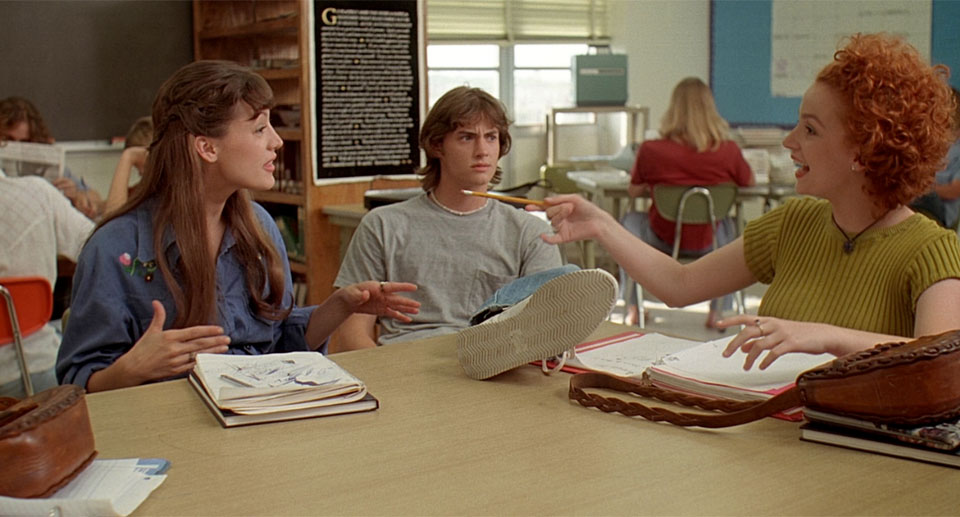
I’ve never been one to miss high school, but I do occasionally find myself longing for something from those days, something lacking in the day to day management of adult life.

My favorite discussion of the famous eye-slicing sequence can be found in Virginia Carmichael’s Framing History, where she compares Bunuel’s film to E.L. Doctorow’s The Book of Daniel, a novel that attempts to make sense of the early Cold War years.

John Cassevetes is my latest obsession. On a whim, I recently picked up a used copy of Faces, the story of Dicky and Maria Forst’s disastrous attempts to find peace and companionship outside of their loveless marriage. Shot entirely in stark, high-contrast black-and-white, and featuring Cassevetes’s trademark dialogue, Faces feels at times like a documentary — voyeuristic, discomforting, and brutally real.

The problems of irony, particularly when of the postmodern bent, are on mind-numbing display in Adaptation, a film that collapses under its own self-referential weight so many times that, at some point — and I think it was right about the time that Meryl Streep started humping Chris Cooper — I stopped watching the film and began waiting for it to end.
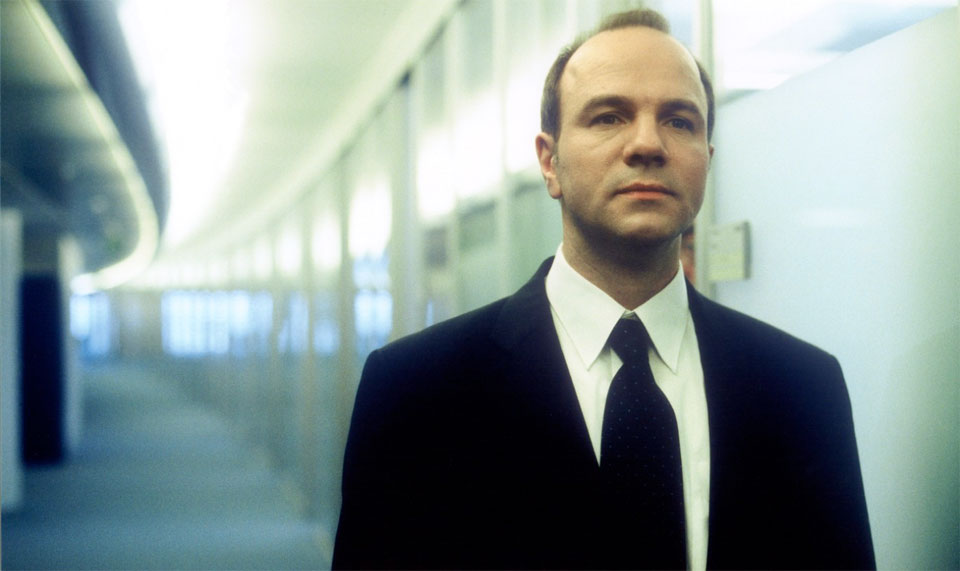
What separates Time Out (2001) from the recent spate of “disillusioned upper-middle-class white guy has a breakdown” movies is writer/director Laurent Cantet’s interest in the specific economic forces that lead — some would say inevitably — to such discontent.

I spent my lunch hour (and then some) sitting around a table with the senior pastor of a Presbyterian church, the priest of a local Orthodox congregation, and three other laymen, discussing Andrei Rublev.
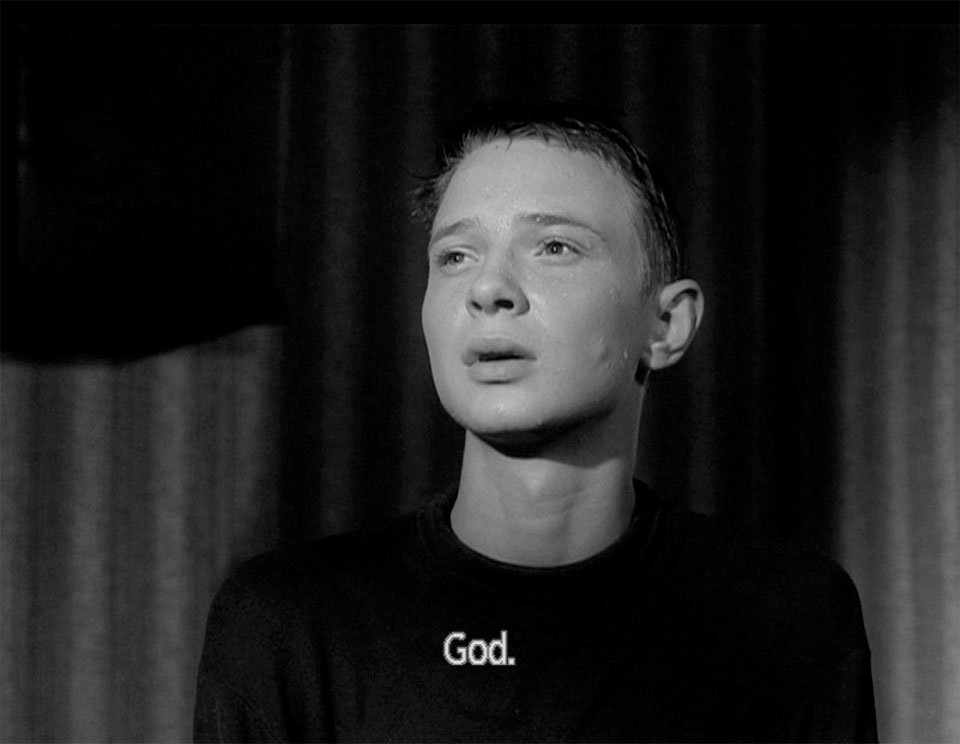
What Bergman does get absolutely right in Through a Glass Darkly, though, is the very real horror of the existential crisis, the moment when Camus’s Sisyphus pauses, watching his stone roll once again down the mountain.

A day-by-day viewing log of my filmwatching habits in 2003, beginning with James Foley’s Glengarry Glen Ross (1992) and ending with Wes Anderson’s Bottle Rocket (1996).

I wonder if it might be more useful to call FMJ an anti war-movie movie. For the auteur is obviously fascinated, in a deliberately self-reflexive way, with the influence of images and storytelling on the formation of what might be described as ideological mythology.
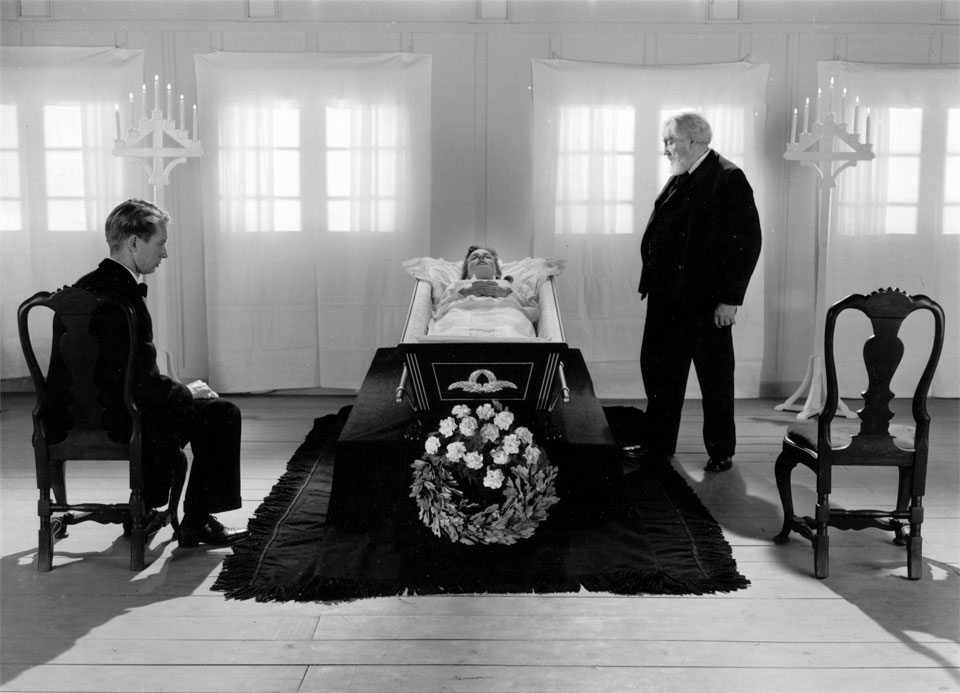
That sudden, strange, and fleeting encounter with something beyond ourselves, something almost otherworldly, transcendence is both the aspect of the arts to which I’m most drawn and about which I feel least capable of writing.