Godard ’66-’67
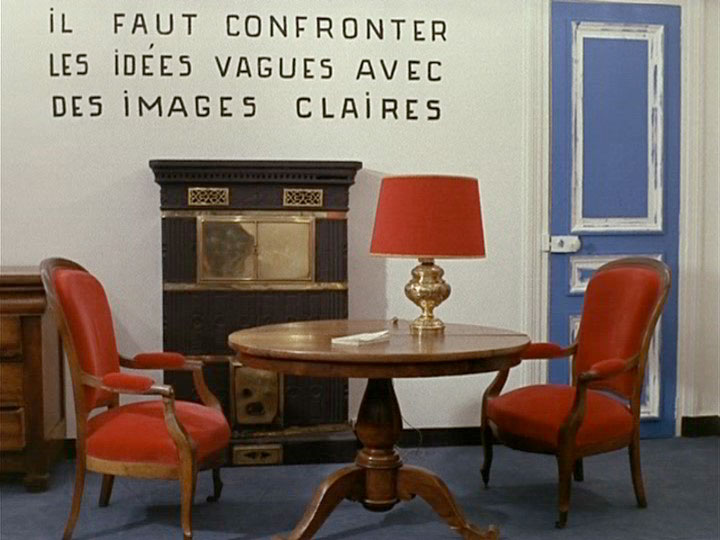
Over the last few weeks I’ve watched for the first time the five features that followed Pierrot le Fou, all of them released in 1966 and 1967.
Over the last few weeks I’ve watched for the first time the five features that followed Pierrot le Fou, all of them released in 1966 and 1967.
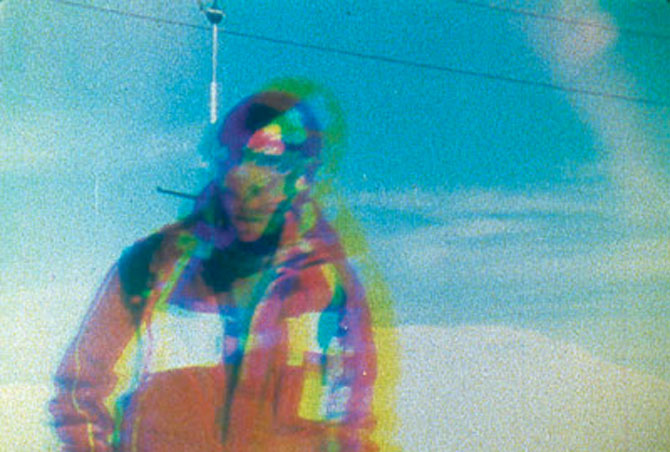
Nicolas Rey’s Schuss! is an experimental essay film that is concerned, ultimately, with the spoils of capitalism. More specifically, it’s about the rise of the aluminum industry, the building of a French ski resort, and the economic interests that joined the two.

In the foreground sits Harry Becker (Vincent Sherman), a young radical who only the night before was beaten and arrested by the police for, as his mother explains it, “making Communist speeches.” He sits here with George Simon (John Barrymore), a high-powered attorney whose office overlooks Manhattan from atop the Empire State Building.
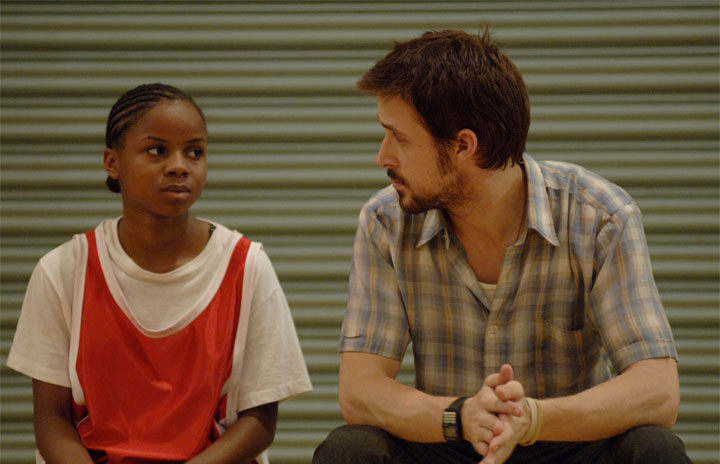
It’s rare these days when I find myself identifying with a character in the same way that, say, the 7-year-old version of me identified with Charlie Bucket or the 15-year-old version of me identified with Holden Caulfield. But Dan Dunne, the crack-addicted, idealistic History teacher played by Ryan Gosling in Half Nelson, is more like me than any other character I’ve met in quite some time.
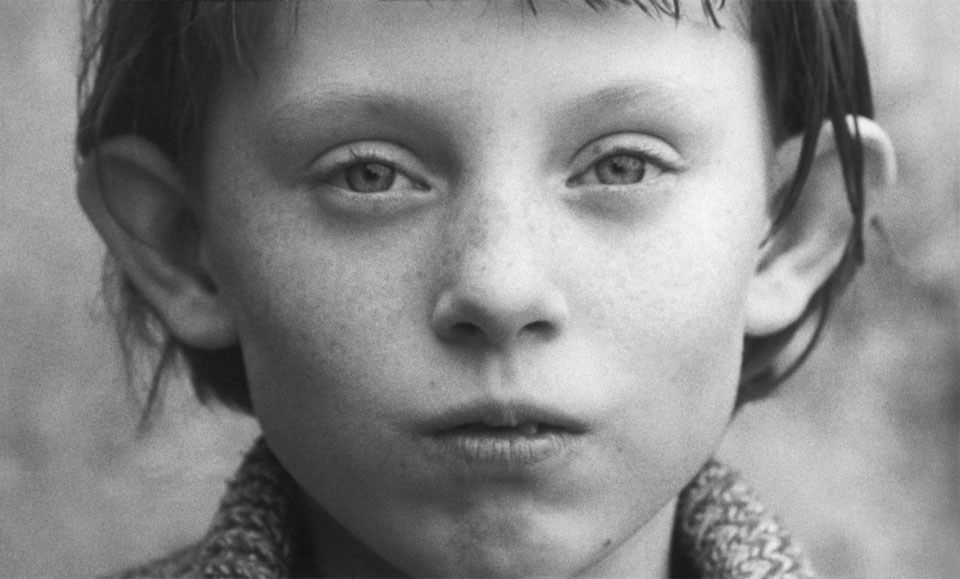
Like the coal buckets in Damnation, the opening shot of cows being loosed into the fields in Satantango is as beautifully strange and breath-taking as any image I saw all year. Following it with a hundred more long takes pushes, in interesting ways, the limits of the affect.
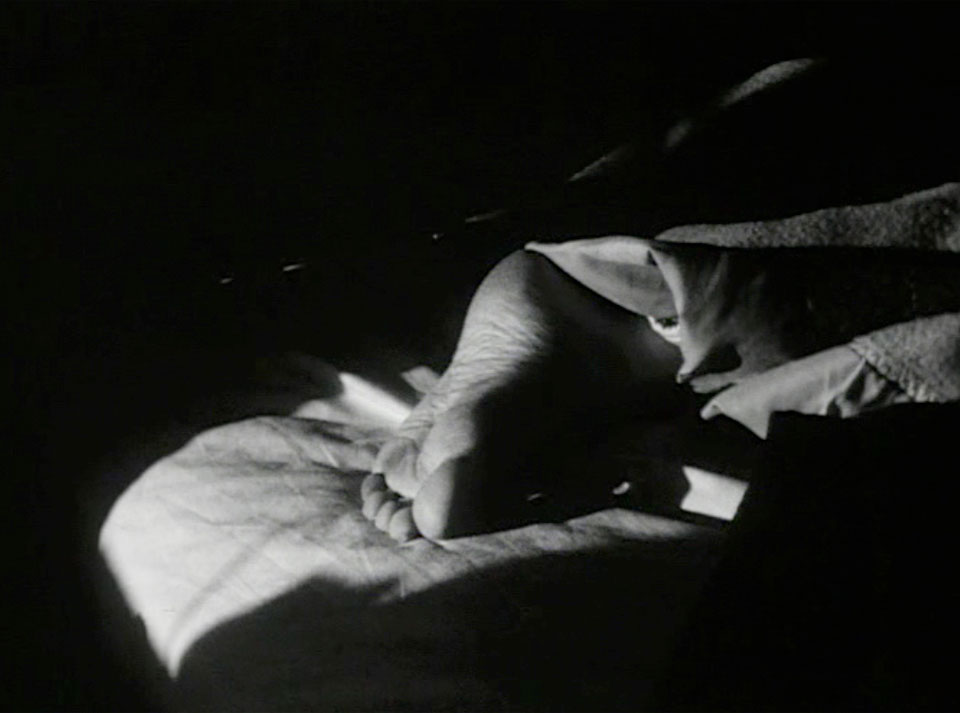
After seeing the Jennings film and Nathanial Dorsky’s Song and Solitude on the same program, I walked away wishing I could recalibrate my view of the world around me, which, I guess, is one of the more noble functions of a-g cinema.
We had our annual Thanksgiving pot luck dinner last night. Along with the traditional turkey, stuffing, cranberry relish, and pumpkin pie, we had Polish mushroom rolls and potato salad, smoked salmon sushi, Mexican bread pudding, and two Taiwanese dishes: a sweet bean dessert and beef viscera.
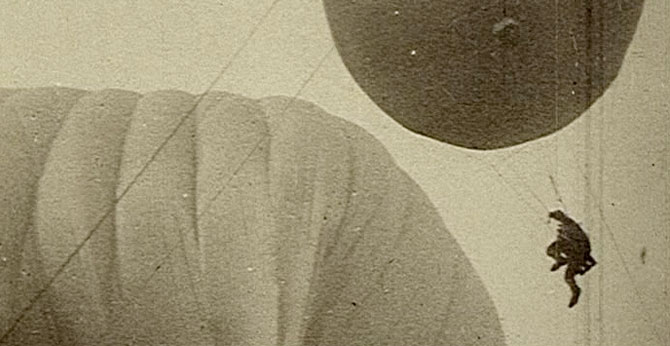
This mix began with a single iTunes download. My all-time favorite needle drop accompanies my favorite sequence in what also happens to be my favorite film, Andrei Tarkovsky’s Mirror.
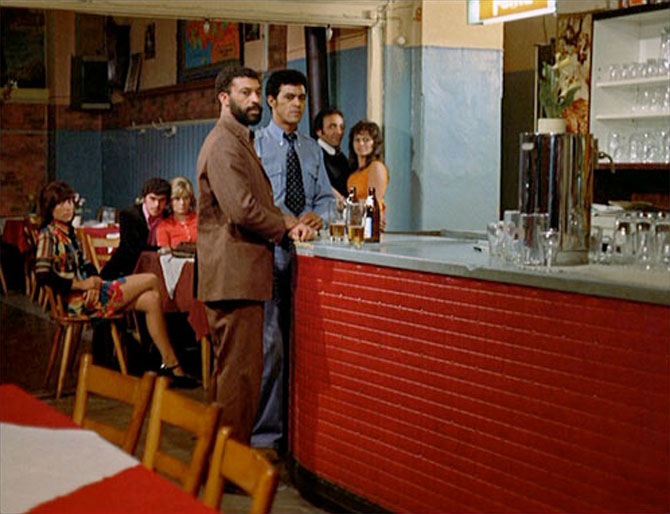
Last night I watched Ali: Fear Eats the Soul (1974) for the first time in six or seven years. I’m relatively unfamiliar with Fassbinder and have never had much of a sense of his style. What struck me last night was how avant-garde, formally, Ali is.
Tony Kushner is taken to task from time to time for his harsh treatment of Joe Pitts, the closeted, Republican, Mormon lawyer whose self-hatred motivates so much of the plays’ drama (and poisons his marriage to Harper). Those critics must ignore this passage, which is among the most beautiful and heartbreaking Kushner has written. It’s been at the very back of my mind for nearly a week now but came front and center earlier this evening.
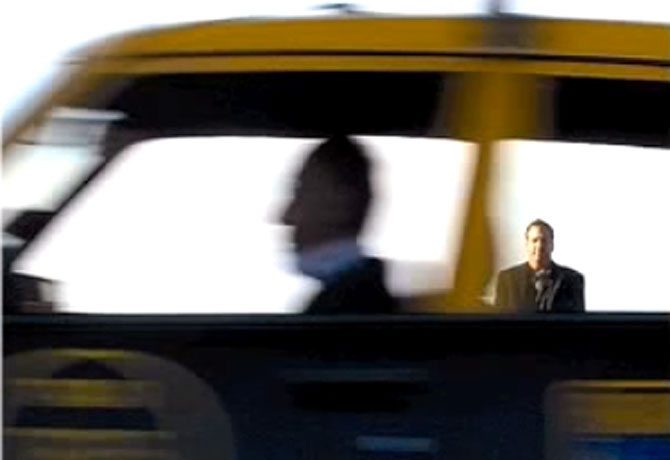
William Wyler’s The Big Country (1958) is one of those westerns about men proving themselves in the unforgiving and sublime conditions of the American southwest.
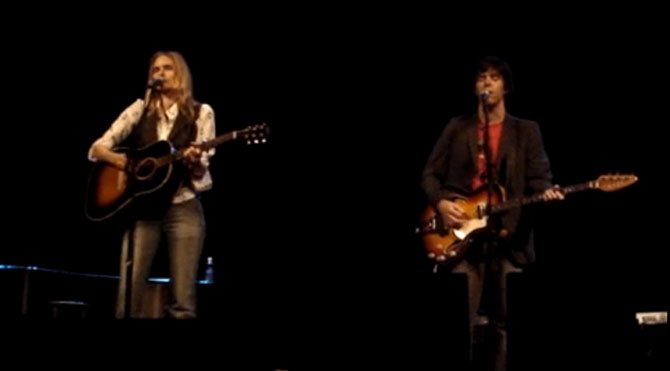
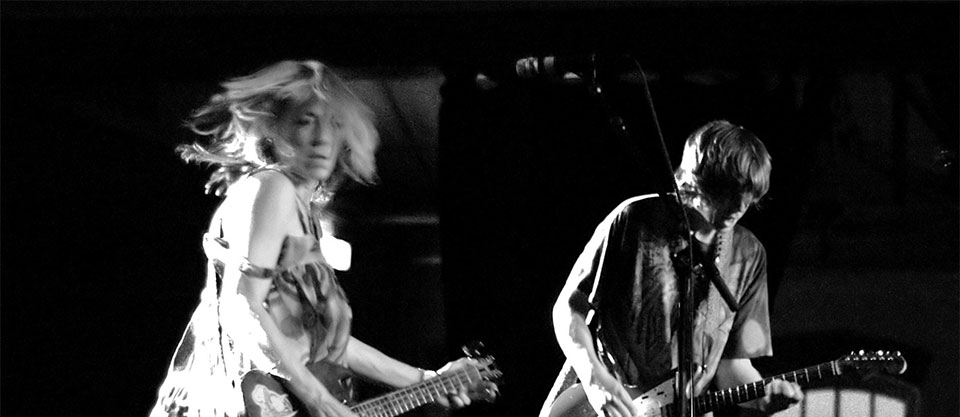
I’d brought along Joanna’s bite-sized Sony Cyber-shot camera in hopes of getting some decent stills, but the light was too low (even from the third row) and, as a result, all of the photos were streaked by motion blurs. So, instead, I experimented with the video capture, and I’m really pleased with the results — especially with the sound.
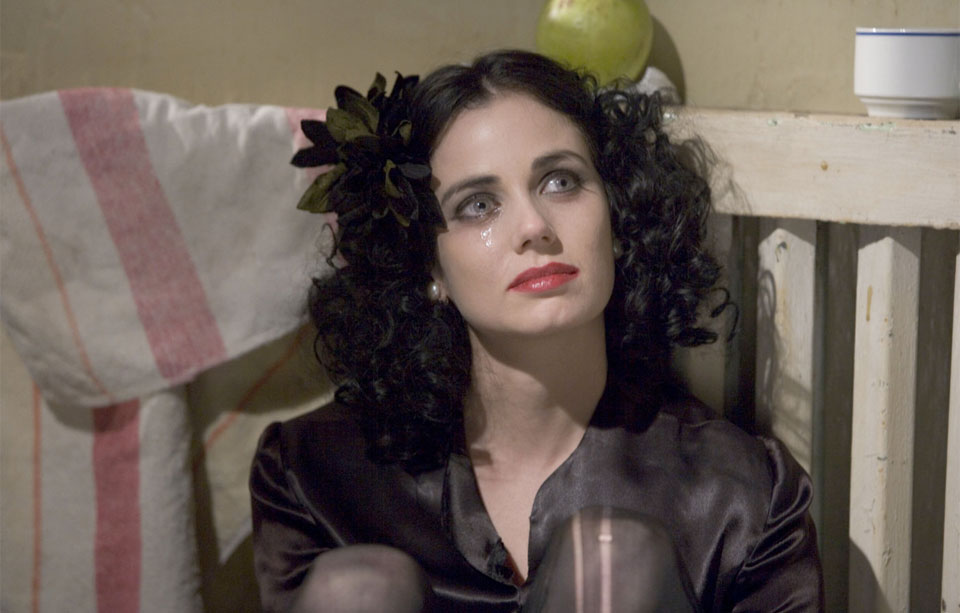
I’m nowhere near deciding yet whether or not The Black Dahlia is good, but it’s certainly among the strangest and most fascinating Hollywood films I’ve seen in quite some time.
In the next week or so, I’ll finish my five-month “study” of William Wyler (with some write-ups still to come), and I’ve decided for my next project to spend the fall and winter with Godard.
The Toronto International Film Festival is exactly the right length. After seeing thirty or forty film programs in nine-and-a-half days, I’m always ready for it to end. I hate that it’ll be another year before I get to walk down Yonge Street again, discuss movies over sushi with friends again, and discover so many great new films again, but, for the time being at least, I’m glad to be home.
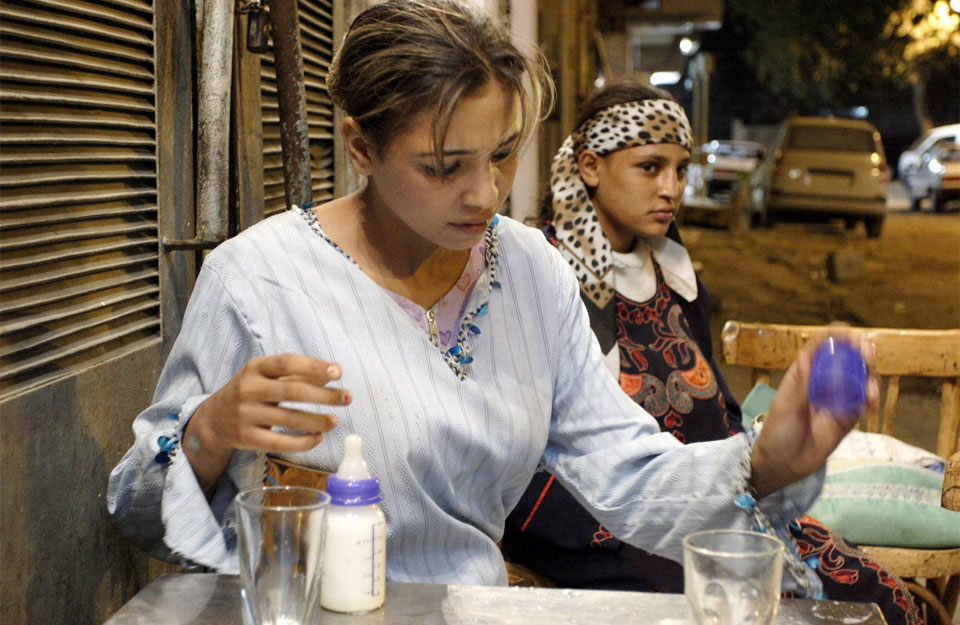
These Girls is a difficult film to watch. Rached avoids over-sentimentalizing her subject, and, frankly, the girls have been hardened to the point that, at times, I found it difficult to muster the appropriate sympathy for them. (I say that with embarrassment.)
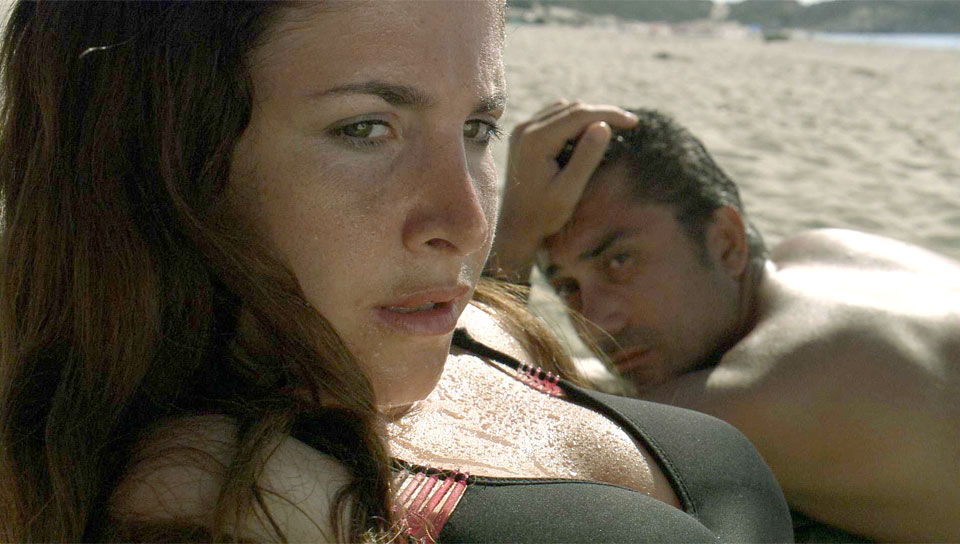
Perhaps it’s simply the inevitable result of paring down my schedule from 44 films in 2005 (only 35 of which I actually saw) to “only” 33 this year, but my sense while researching and planning over the past weeks was that TIFF’s lineup is stronger, top to bottom, this time around than in previous years.
Late last night I received a confirmation email from the Toronto International Film Festival box office, notifying me that I would be seeing all thirty of my first choice films. Given that so many of my friends are still awaiting similar confirmation, mine appears to have been one of the first orders processed — just lucky in the lottery draw this year, I guess.
When I visited Seattle a couple weeks ago, I had what was quite possibly the most satisfying meal of my life.
This post is about the years I spent as a broke-ass graduate student, unable to afford to see the shows that came through town.
The idea of creating an Excel file to collect information about each of the 300+ films occurred to me two years ago, when a friend (and TIFF veteran) told me he chose his films based on very particular and personalized criteria.
What most interests me — and what I lack a vocabulary to properly describe — is the direct connection between the form and political content in both of these films. That brief frisson that occurs when the pose drops — when a person who lives in an image-marketed and -mediated culture suddenly finds herself set adrift in the semiological flux — that moment, I think, is an instance of political resistance.
Szarkowski’s response to Laughlin’s The Language of Light is my favorite passage — it struck me immediately as a perfect Long Pause — but every page is a new discovery.
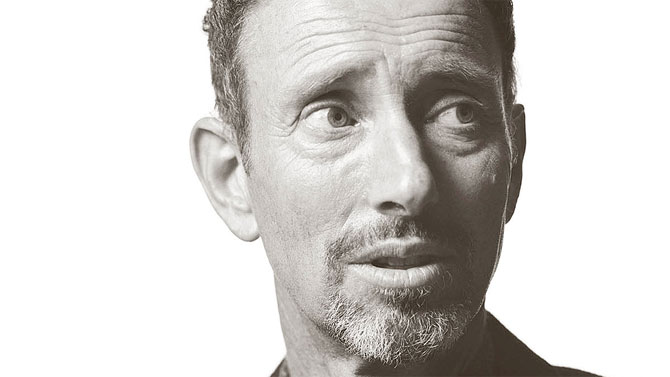
This is the second time “The Origin of Love” has been a Long Pauses Song of the Moment. Again, I was inspired by seeing a live performance of Hedwig and the Angry Inch — this… The Origin of Love
In a couple hours I’ll be joining some friends for a lunch-time discussion of Eyes Wide Shut. A month or so ago, we happened upon the theme of “the philosophy of sex” for our film group, and in the weeks since we’ve watched the remake of Solaris (we did the Tarkovsky last fall), Sex, Lies & Videotape, and, now, the Kubrick film.
This is my first visit to Seattle, so any recommendations would be much appreciated. After a nap, a shower, and a cup of coffee yesterday afternoon, I walked to Wild Ginger, a restaurant that was recommended by a local friend.
Kakutani’s reading seems lazy to me. She’s misjudged these folks — not to mention Hornby’s intentions — and is punching herself silly, chasing after her straw men.
About three-and-a-half minutes into “Kitty’s Back,” just after Springsteen’s blaring, horn-backed solo, Sancious steps in with a squirrelly run on his Hammond organ, followed by a slew of percussive figures and arpeggios. Harmonically, it isn’t an especially interesting solo, but it’s exactly the kind of Booker T-inspired playing the song needs.
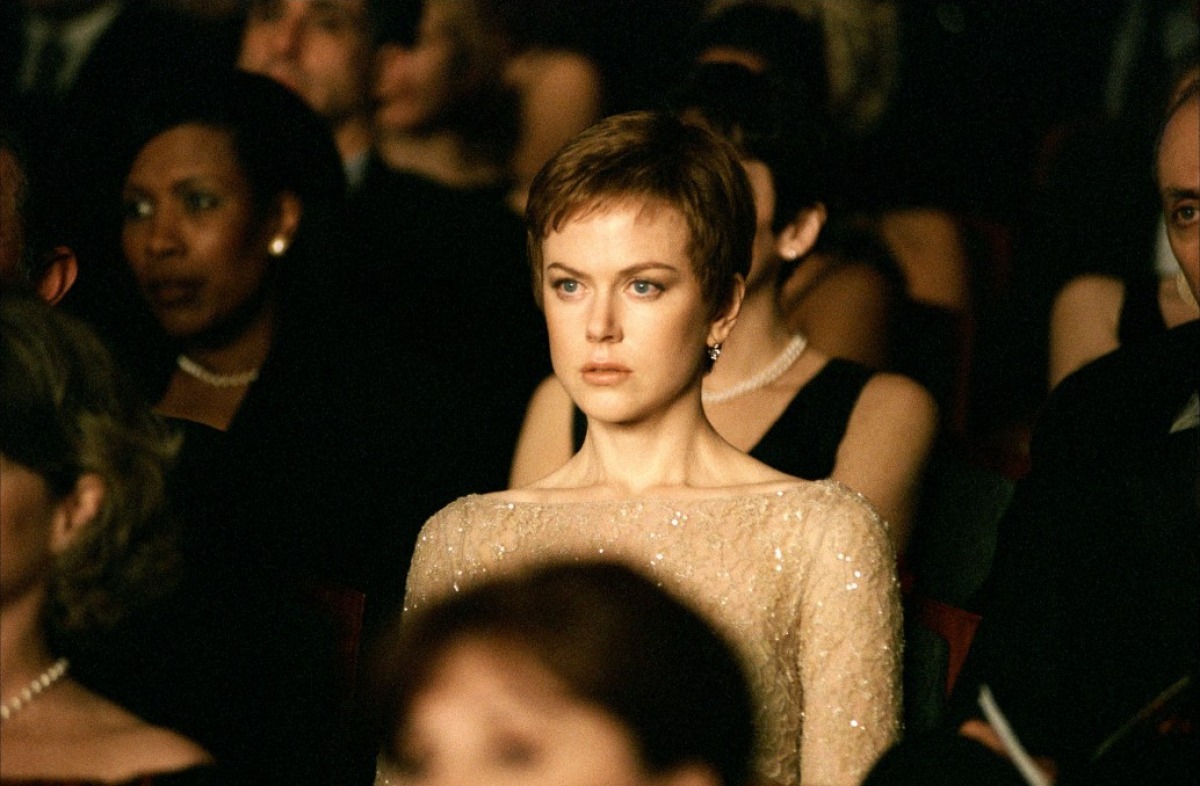
Anna so quickly and so easily falls in love with the young Sean not because he’s a manifestation of her dead husband but because he so effortlessly performs a role that is wholly the work of Anna’s imagination. She has conjured an idealized version of Sean through the magical incantation of her love letters.