Now in Widescreen
Welcome to Long Pauses (version 8.0). Consider this redesign a usability study.
Welcome to Long Pauses (version 8.0). Consider this redesign a usability study.
But the emotional effect of the music — on me, at least — is anything but ironic. In true Melvillian fashion, this is an epic battle of Drama and Meaning, the most epic battle, in fact, if we recall our fuzzy memories of the Christian symbolism that permeates Billy Budd. Granted, Denis strips away most of those symbols, but the central conflict of the film remains mostly unchanged.
Or, a few words about Nicholas Ray’s Born to be Bad (1950) and Rebel Without a Cause (1955).
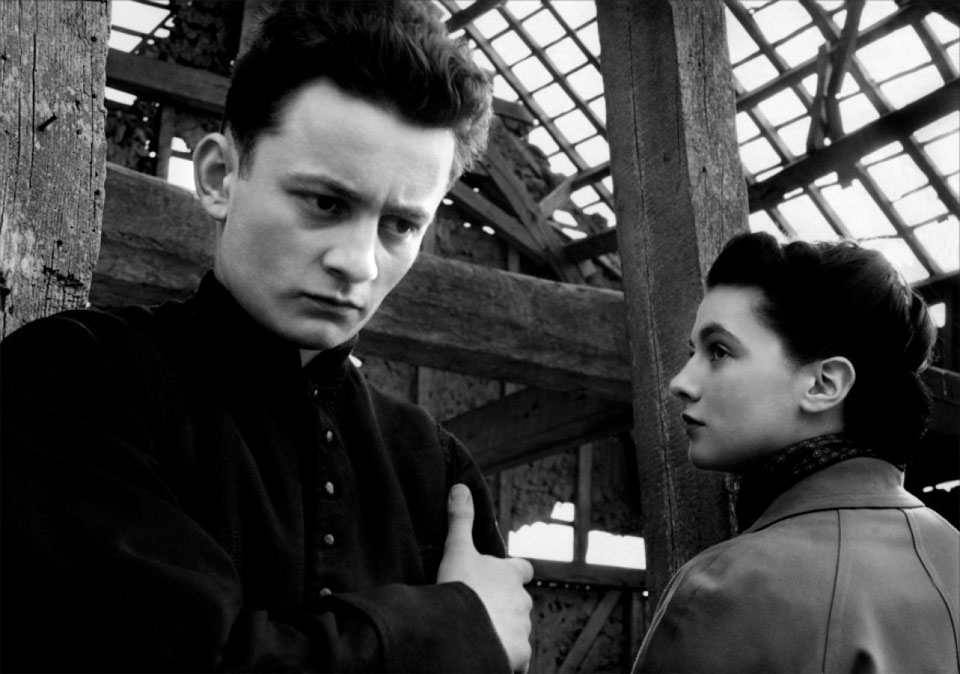
The fine folks at the Arts and Faith discussion forum have cast their votes, crunched the numbers, and released their second annual list of the Top 100 Spiritually Significant Films. In honor of their fine work, I offer my own obvious and predictable Top 5 list.
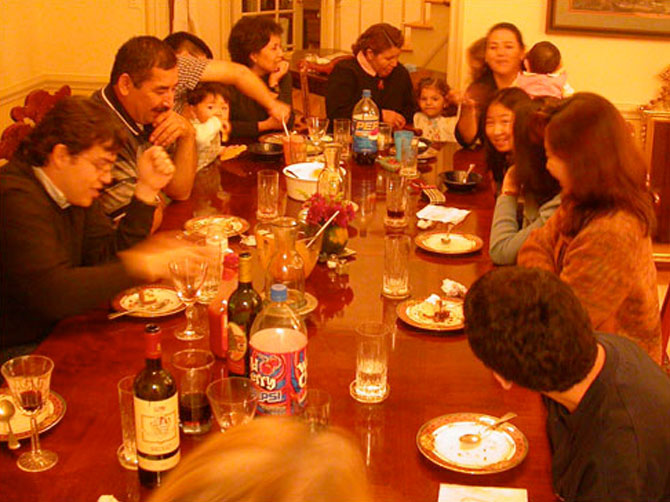
I love that this photo managed to capture all fourteen of our guests (plus the top of Jo’s head at the bottom of the frame), and I still enjoy looking at the expressions on their faces.
E. L. Doctorow delivered the following speech before a subcommittee of the House Appropriations Committee in the fall of 1981. Given the on-going budget battles in Congress, Doctorow’s words are also more than a bit timely.

What she whispers to him is less important than the unexpected moment of silent intimacy shared between these two lovers in a crowded, noisy room. The whole film is in that image — Dix bowing his head to her as a gesture of trust; Laurel closing her eyes in hope of love, then opening them to the sight of a detective entering the room.
While sipping my second glass of wine, I did my best to affect the look of someone waiting for that old friend I had arranged to meet — you know, staring intently across the room, even rocking forward onto my toes from time to time for a better vantage — but apparently I failed miserably.

This essay was presented at the 2005 conference of the South Atlantic Modern Language Association.

In the opening shot, Zahedi addresses the camera directly, introduces himself as Caveh, and tells us that for many years he was a sex addict. His film is a frank, neatly-plotted, and curiously moving recreation of those years. It’s also incredibly transgressive and very, very funny. Quite a balancing act.
I’ve come to feel increasingly alienated from evangelical culture, and politics is an important reason. I used to write about this a lot more on Long Pauses, but I grew tired of my own voice and my own hypocrisies. Too much finger-pointing. Plus, the results of the 2004 election broke my heart. I’ve felt more than a bit defeated and hopelessly cynical ever since.
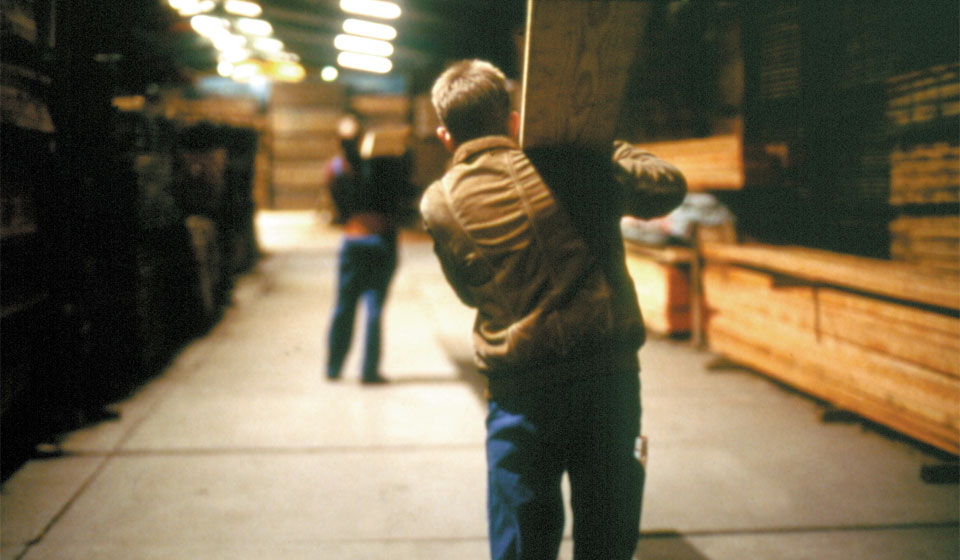
In celebration of its 15th anniversary, the IMDb has invited its editorial staff to submit their Top 15 Lists: 1990-2005. Never one to pass up an opportunity to obsess for a few days over such a challenge, I’ve put together a list of my own — a list joyfully free of editorial imposition, meaning that I can stretch and/or ignore even the most basic criteria/rules.
You know, I’ve spent the better part of the last decade reading and studying 20th century lit, and I’ve still only read 27 of the best 100 books. Where did I go wrong?
Instead, I’m working on another conference paper — this one to be delivered next month in Atlanta, which is an easy drive, and thank God for that.
A few years ago, some friends and I threw a surprise party for Joanna. The coolest present she got was a life-sized cardboard cutout of Legolas — the perfect addition to our Orlando Bloom-themed party, which was all about pirates and elves and horses and my then-31-year-old wife’s Peter Pan syndrome.
I just stumbled upon a review of Un Couple parfait that calls it the “quintessential Boring Art Film.” I have no qualms with this particular critic. In fact, he and I are often in agreement. All of which makes me wonder, Why do I love Boring Art Films?
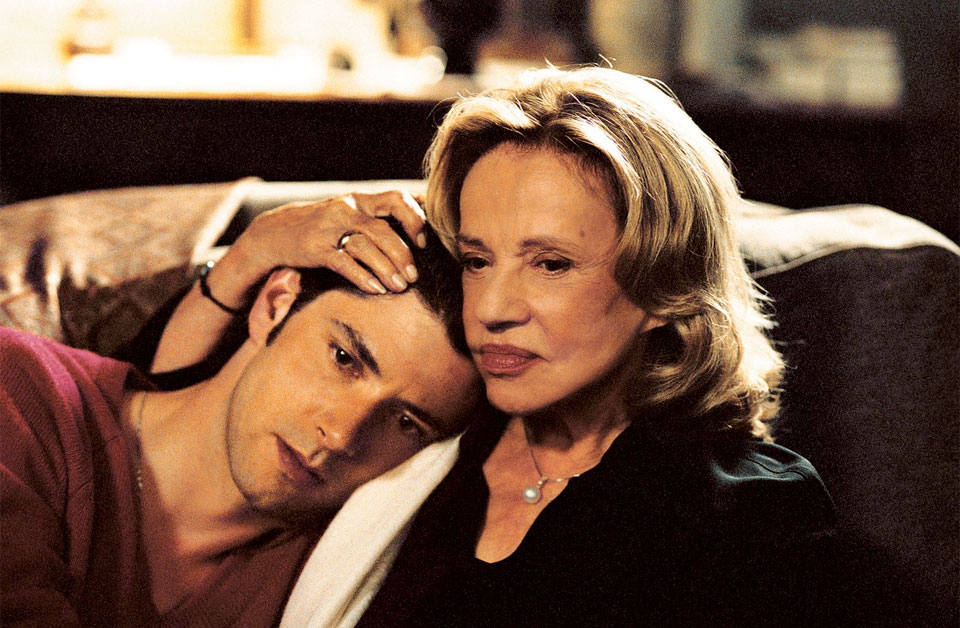
I hadn’t planned to write about Le Temps qui reste, but then, while typing up notes this morning, I tripped over this line from E.L. Doctorow’s The Book of Daniel: “My sister and I can never inflict total damage — that is the saving grace. The right to offend irreparably is a blood right.”

Look closely at the image above. It’s Un Couple parfait in miniature — a story told in body language.
The fall semester of my ESL class kicked off last night, and we began with a discussion of Haruki Murakami’s “The Elephant Vanishes,” which is, quite frankly, one of the most beautiful stories I’ve ever read.
A friend’s line last year was, “Thank God there are no more movies. I wish there were more movies.” That about sums it up, I’d say. A last batch of first impressions.
Last Thursday, Girish introduced me to a friend of his, a Toronto native who had just returned from Montreal, where he had seen 54 films at that festival. He had another 45 tickets in hand for TIFF. I don’t get it. I just left my 31st film (I think), and I’m exhausted. Completely.
I haven’t decided if the quality of films is improving or if I’m simply developing calluses to sentimentality and failed ambitions, but I’ve seen several good films (though few great ones) since my last update — and not a dud in the lot.
After three days, 14 films, a brilliant Sufjan Stevens concert, several fantastic meals, and too little sleep, I’ve abandoned my ambitions of blogging a brief capsule review of everything I see. There’s too little time, and I don’t want my TIFF experience to be hampered by blog guilt. Instead, here are some brief comments — first impressions and unsupported opinions, mostly.
I have tickets for 44 films this year, plus a ticket to Sufjan Stevens’ sold out concert at the St. Paul’s Centre. 44 tickets. It’s absurd. But with a 50-film festival pass, I decided to schedule as many as possible, knowing that I’ll end up skipping a handful along the way.
If you’re reading this in the future — say, you’ve wandered here via some poof of Google magic — you should know that if I were to turn on my television right now (now being the afternoon of September 2, 2005), I’d flip past image after image after image of destruction, violence, and misery.
The plan is to spend the next few hours poring through the catalog, obsessing over the schedule, and checking titles off of my spreadsheet — yes, I created a spreadsheet — all in hopes of creating the most efficient and dud-free lineup of films possible. I then overnight my ticket requests back to Toronto and hope for the best.
Week in Review: Black Rebel Motorcycle Club, John Vanderslice, DeLillo, Hornby, Jarmusch, and The Battle of Algiers
With apologies to Nick Hornby. While reading The Polysyllabic Spree, a collection of his “Stuff I’ve Been Reading” columns from The Believer, two things occurred to me.
That is how George Fasel began his first post at A Girl and a Gun. He became one of my Daily Reads a month or two later. Like I wrote in the comments there, as saddened as I am to hear of George’s passing, I’m also feeling strangely inspired and encouraged by his example.
At Girish’s request, I’ve pasted together a mix of music that features the Fender Rhodes.