Reading
“Perhaps the best lesson of books is not to venerate them — or at least never to hold them in higher esteem than our own faculties, our own experience, our own peers, our own dialogues.” — Christina Nehring
“Perhaps the best lesson of books is not to venerate them — or at least never to hold them in higher esteem than our own faculties, our own experience, our own peers, our own dialogues.” — Christina Nehring
I’m excited to learn that Roth is melding his recent interests in mid-century American history with the more experimental projects of the late-80s and early-90s — Operation Shylock, in particular.
Jack Neely, everyone’s favorite chronicler of life in Knoxville, has a nice piece in this week’s issue of the Metro Pulse about his recent efforts to sell some old books. It’s a great glimpse into the lives of book lovers and the dealers who support their habits, with nary a mention of Borders or Barnes and Nobles in sight.
Williams “without poetry.” That can’t be good.
I’m almost finished Dreamer, Charles Johnson’s novel about Martin Luther King, Jr.’s struggles in Chicago in 1966, and it’s amazing — the finest novel I’ve read in months. (Dreamer wants to become part of my stalled dissertation; I have, as yet, managed to fight that urge.)
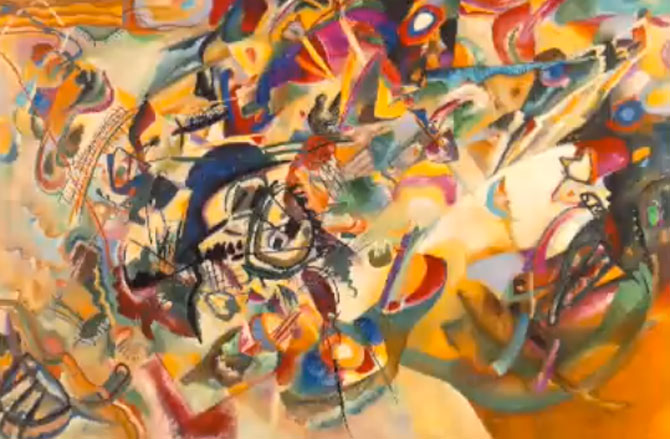
Several years ago, in a seminar on modern and postmodern lit, I wrote a fun paper on Ezra Pound’s music criticism. In particular, I was interested in Pound’s admiration for Bartok’s String Quartet #5.
Poet/scholar Helen Vendler, the 2004 Jefferson Lecturer in the Humanities, last night gave her address, “The Ocean, the Bird, and the Scholar,” which is as inspiring a defense of the arts as you’re likely to read.
What a pleasant surprise to stumble into some nice bits of writing in, of all places, Stereophile magazine.
So many of Perrotta’s observations of suburban life are so spot-on — I especially like the way that his lead characters absolutely adore their children while still resenting somewhat the life-changes they’ve caused — but the narrative voice never quite transcends the banality of the lives it is documenting. Maybe that’s the point. I doubt it.
Yesterday I finally got my hands on the first issue of the new Beyond, and I can’t tell you how proud I am to be associated with it.
Interesting passage from today’s Chonicle. From Susan Wise Bauer, visiting instructor of English at the College of William and Mary, on “close reading.”
Philip Roth on Charles Lindbergh.
For your reading pleasure: some snippets from Tony Kushner’s commentary on the Klezmatic’s recent CD, Possessed. Parts of the commentary, I noticed, have made their way into his and Alisa Solomon’s introduction to their new collection of essays, Wrestling with Zion.
I am of two minds about The Meanings of Social Life: A Cultural Sociology. The argument that Alexander and Philip Smith lay out in Chapter 1 is intriguing, and Alexander’s application of it in his readings of the Holocaust and Watergate are refreshingly useful. The rest, to be perfectly frank, feels a bit like filler.
Dale Peck at Slate offers the best critical reading of HBO’s Angels that I’ve found. He points out something that has bothered me a bit as well: the film just isn’t very funny. Which is a shame, because the play is really funny.
Did those works affect me so profoundly because of my particular motivations at that particular moment, or because of the artist’s genius? Some combination of the two, I guess.
A brief list of the books I’ll likely not finish.
I’m thrilled so far with Angels. Mary-Louise Parker is stealing the show as Harper, and Justin Kirk is fantastic as Prior. The homage to Cocteau and the casting of the prior Priors were both brilliant. But why, in their trimming and reshaping, did Kushner and Nichols have to cut my two favorite lines from Millennium Approaches?
I expect conservatives to be offended by many of the lines spoken by Kushner’s characters; I expect conservative critics to acknowledge the distinction between the message of a particular character and the message of the work as a whole. But that is expecting too much of anyone who writes for a partisan magazine (whether the NRO or The Nation) in a climate like ours.
Today, after tracking down the last of those elusive Philip Roth essays, I gave into my craving and checked out Just Being Difficult? Academic Writing in the Public Arena, a new collection of essays edited by Jonathan Culler and Kevin Lamb. According to the jacket copy.
Richard Goldstein offers the best one-paragraph synapsis of Angels in America that you’ll ever read. (He also talks to Kushner about Walter Benjamin, Bertolt Brecht, the problems of liberalism, and his new musical, Caroline, or Change.)
In this new interview, Mother Jones calls Tony Kushner a “Radical Pragmatist,” a moniker I wouldn’t mind carrying myself.
If Sullivan reads Angels in America as a Stalinist tract, then I pity his ideological blindness. He’s missing a hell of a play.
We all know that Stanley Kauffman, that grand icon of American film-reviewing, has been with The New Republic since 1958. But did you know that he was preceded immediately by a young punk of a wannabe novelist named Philip Roth?
HBO’s economic freedom is just one of the many topics of discussion over at Newsweek, where Mike Nichols, Tony Kushner, and their cast are talking up Angels in America.
I first read Sam Shepard’s Buried Child five years ago in a graduate readings course in American drama. Last night I was finally able to experience it in performance, which, as is always the case with great drama, is a quite different thing.
Paul Ford posted a great piece on the death of Elliott Smith that is all the more timely given the impending release of that Sylvia Plath film.
I spent my lunch hour over in the library, where I went snooping for some old Arthur Miller essays. Most have been collected in fine editions, of course, but I like to put my hands on the originals.
Closer will be directed by Mike Nichols, who apparently is going to finish out his career by filming great plays. Two months and counting until I fire up my one-month subscription to HBO in order to watch Nichols’s rendition of Angels in America.
Tim Adams from the Guardian Observer, spent last week reading the ten novels that top England’s Best Seller list. A glutton for punishment, apparently.